
 RESEARCH
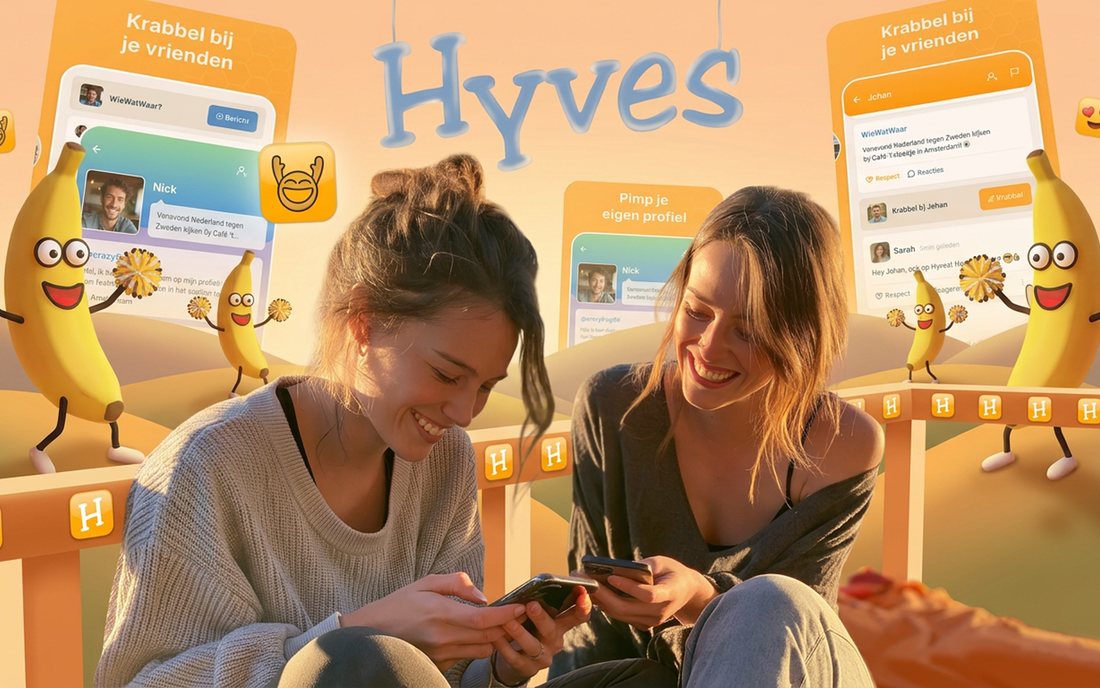
Hyves is back as the 'decent' alternative to the big platforms: no sharing of user data with other companies, storage on European servers and a timeline without an algorithm. Yet the very promise that is meant to set it apart is not being believed. 43% of Dutch people do not think Hyves keeps user data to itself; just over a quarter does believe it. That emerges from research by MSI-ACI among 510 Dutch people aged 18 and over, carried out in the week after the relaunch.
The return has been widely noticed: three quarters heard about it in the past week through news or social media. Actual use lags far behind: 6% have an account and just under half do not want one. The rest are waiting for access, still intend to sign up, or are undecided.
Who those interested users are holds few surprises: they are mainly the people who knew Hyves the first time round. The 26 to 35 age group were the most active back then, feel the most nostalgia at the word and are the most likely to want an account. People over 56 largely drop out, and 18 to 25 year olds, for whom Hyves is new, are willing to try it but often expect to leave again quickly. All in all, one in five expect to still be using Hyves three months from now; men are more certain of that than women.
Those who do not join, or who drop out, rarely do so out of privacy concerns. The most cited reason is simply that people already have enough apps; over a third say so. Others miss their friends on the platform or doubt whether Hyves will last. Privacy comes last in that list. Yet the privacy promise is precisely the argument with which Hyves hopes to win over the doubters, and that is the promise people are not buying.
Hyves says it does not share user data with other companies. Asked whether they believe that, 43% say no and 26% say yes; the rest do not know. Three quarters of Dutch people, then, do not simply take the promise at face value.
Hyves also points to storage on European servers as proof that it is different from the American platforms. That argument only half lands. Over a quarter see it as a plus and one in five think it goes without saying, but for the others it says little, or they do not know what to make of it. For many Dutch people, 'European' is apparently not yet a reason to believe a promise about privacy.
The doubt is no side issue, because privacy turns out to be a hard limit for many Dutch people. Asked what they would do if Hyves did share data the way the big platforms do, 47% say they would stop using Hyves. Only a small group would probably carry on using it anyway.
The distrust is not evenly spread. It sits mainly with 46 to 65 year olds, at least half of whom do not believe the promise, and with women, who are clearly more sceptical than men. Younger people accept the promise more readily, but also attach less weight to it: for some of them it would not matter if Hyves did share data.
The chronological timeline does strike a chord. Posts appear in the order they were made, as they did on the old Hyves, whereas on the big platforms an algorithm decides what you see. 41% find that appealing, rising to more than half among 26 to 45 year olds.
The Hyves house rules, such as 'treat each other as people', meet with more reservation. A quarter think rules like that genuinely help, a quarter think they change nothing about how people behave online, and the largest group (40%) say it depends on whether they are actually enforced.
A further test comes in 2027, when advertising appears on Hyves. 40% find that reasonable and almost a quarter would drop out because of it; in between sits a group that accepts it as long as advertising is clearly recognisable as such. Among those who would drop out, younger people are by far the majority; older groups see little problem in advertising.
About the research: the figures come from the MSI-ACI Omnibuzz survey in week 39, among n=510 Dutch people aged 18 and over. Differences between groups have been tested for significance (95% confidence).
 Free quote
One of our consultants will contact you within one working day.
Make another application?